What is a Comprehensive Plan?
A comprehensive plan is a document that outlines a community's goals for the future. These goals, however, are not predetermined; the goals are developed through a community engagement process that involves local leaders, stakeholders, businesses, and residents. Throughout this process, members of the community identify the local issues and opportunities that become the basis of the comprehensive plan.
Indiana Code defines the minimum requirements for a comprehensive plan. It states that every plan must contain:
- direction for future development and land use,
- direction for future transportation infrastructure,
- and direction for the development of public facilities, public utilities, and other public places.
Comprehensive plans can also go beyond these requirements and include objectives for other items. The required items, and any other topics addressed in the plan, must be uniquely applicable to the community for which the comprehensive plan is being developed. This is to ensure the plan meets the unique needs of its community.
It is important to note that the comprehensive plan is a guide for local growth and decision-making. The plan is not legally binding.
What is the Planning Process?
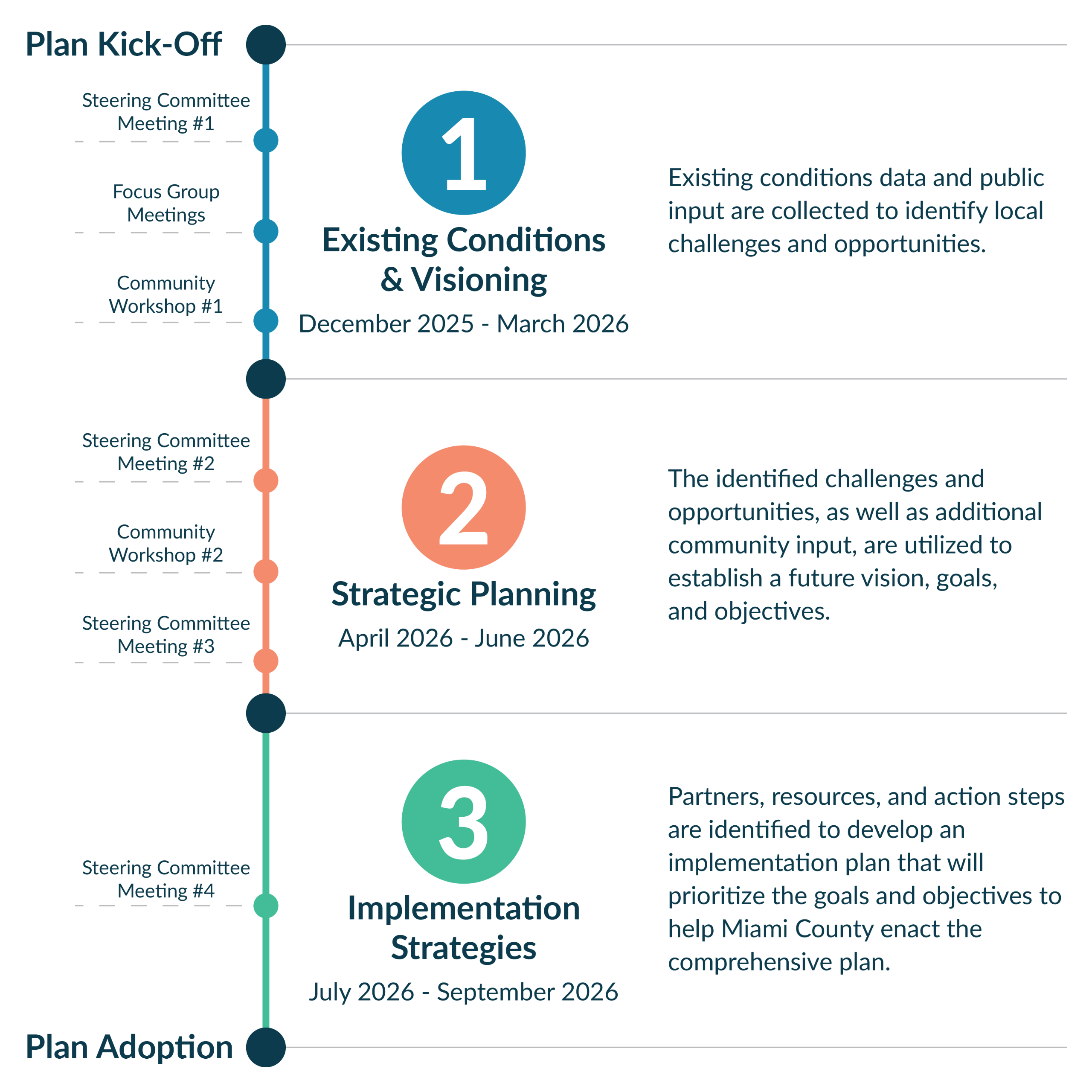
The comprehensive planning process occurs over three phases. In the first phase, existing conditions, including demographic data, are collected and analyzed. There is also a public meeting where the community can identify local issues and opportunities. In Phase #2, goals and objectives are developed with input from leaders, stakeholders, and residents. Finally, in the third phase, an implementation plan is developed to help Miami County enact the plan.
How Can I Stay Involved?
You can stay involved in the production of the Horizon Miami County 2035 Comprehensive Plan by attending the public meetings, taking the online survey, or signing up for the email newsletter below.
Stay Involved!
Sign up for the newsletter to receive updates about the comprehensive plan!


